



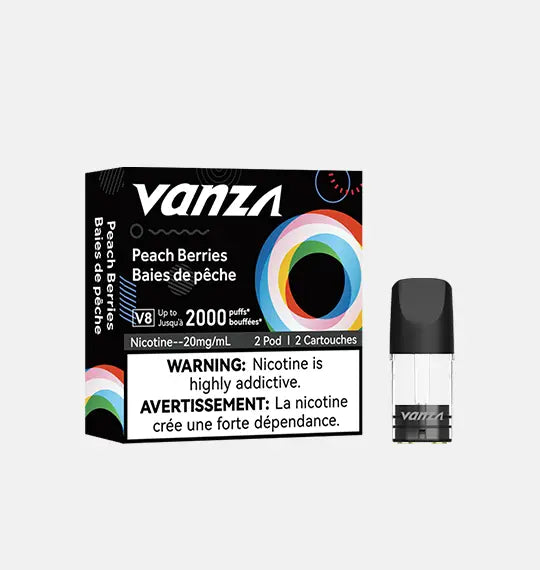
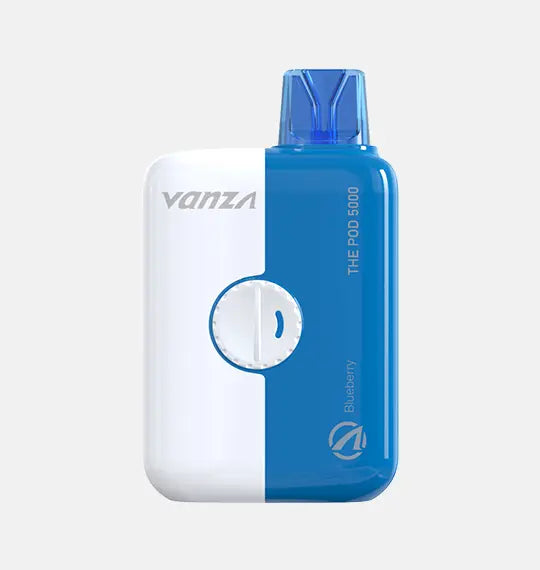
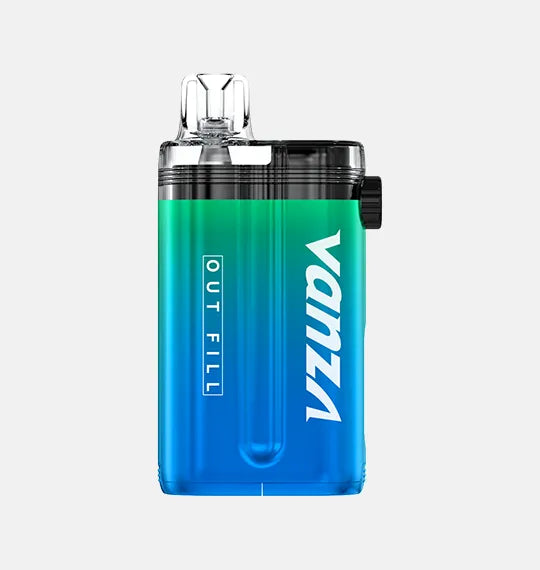

Battery specifications directly impact customer satisfaction and repeat purchases. This guide explains mAh (milliampere-hours), charging technologies, and how to evaluate battery performance across VANZA's product line. Higher mAh doesn't always mean better—optimal battery choice depends on usage patterns, device type, and market preferences. Use our VANZA battery comparison table to make informed inventory decisions.
Why Battery Knowledge Matters for B2B Buyers
When you're stocking a vape business, batteries aren't just technical specifications—they're predictors of customer experience and repeat purchase behavior. A device that dies too quickly or takes too long to charge creates frustrated customers and returns.
The B2B perspective:
- Return rates often correlate with battery complaints
- Customer reviews frequently mention "short battery life" as a negative
- Product positioning depends on accurate battery claims
- Market fit varies—some markets prefer longer battery life, others prioritize compact size
VANZA has analyzed thousands of customer feedback responses across our global markets. Battery performance consistently ranks as a top-5 purchase consideration. This guide helps you leverage that knowledge for better inventory decisions.
What is mAh and Why Does It Matter?
Understanding Battery Capacity
mAh (milliampere-hours) measures a battery's energy storage capacity. Think of it like a water tank—the higher the mAh, the more "fuel" the battery holds.
Simple analogy:
- A 500mAh battery is like a small water bottle
- A 1000mAh battery is like a large water jug
- Both can fill the same glass, but the larger container does it more times before needing a refill
What affects actual battery life?
The rated mAh doesn't directly translate to "hours of use" because:
- Device power consumption varies (higher wattage = faster drain)
- Usage patterns differ (heavy users drain faster)
- Temperature affects battery performance (cold weather reduces capacity)
- Battery age degrades over repeated charge cycles
Real-world usage estimates
| Battery Capacity | Estimated Puffs | Typical Use Time |
|---|---|---|
| 500-650mAh | 2,000-5,000 | 1-3 days |
| 850-1000mAh | 8,000-15,000 | 3-7 days |
| 1100mAh+ | 15,000-35,000 | 1-2 weeks |
Important note: These are estimates. Actual performance depends on puff duration, device settings, and environmental factors.
Battery Capacity vs Device Performance
The Relationship Between Battery and Puff Count
More puffs don't always mean more battery. The relationship involves:
The efficiency equation:
Total Puffs = (Battery Capacity × Efficiency) / (Power per Puff)
Key factors:
- Coil resistance: Lower resistance (sub-ohm) uses more power
- Puff duration: Longer puffs consume more energy
- Output mode: BOOST/TUR modes drain faster than ECO/NORM modes
- E-liquid viscosity: Thicker liquids may require more power to vaporize
VANZA Product Analysis
Let's examine how battery capacity translates to performance across our product line:
VANZA POLAR (1100mAh, 35,000 puffs)
- Quad mesh coils are optimized for efficiency
- Dual mode (NORM/BOOST) lets users control power consumption
- 1100mAh battery is engineered for 35,000 puffs through optimized circuitry
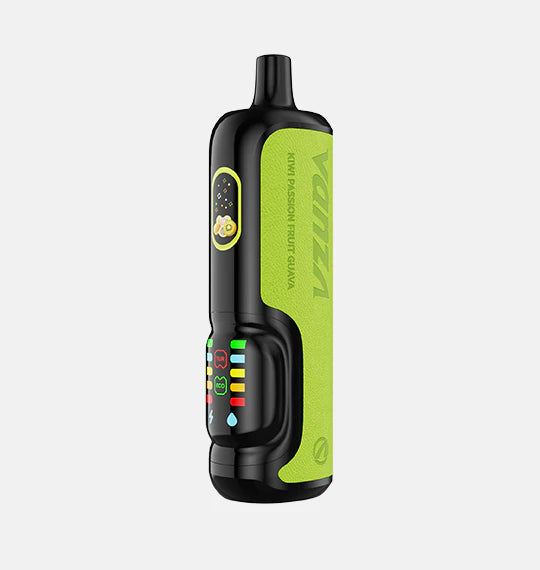
VANZA MAGIC (1000mAh, 15,000+ puffs)
- Ceramic coil technology increases efficiency by ~50%
- 5-color LED is energy-efficient
- Transparent tank doesn't affect battery performance
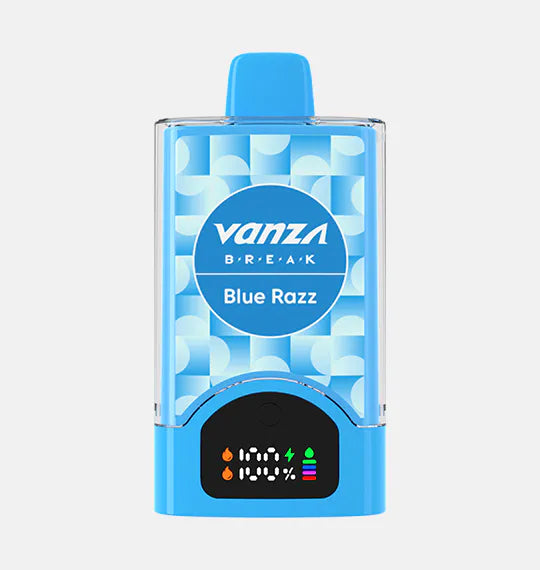
VANZA CUBIC (900mAh, 12,000 puffs per pod)
- ECO mode extends battery life significantly
- BOOST mode provides full power when needed
- 900mAh optimized for the 12ml pod capacity
VANZA SE 12000 (650mAh, 12,000 puffs)
- Compact design with efficient power management
- Lower mAh offset by smaller power requirements
- Type-C charging for quick top-ups
Understanding Battery Drain Patterns
Linear drain: Battery performance stays consistent until near-empty (ideal)
Early drain: Strong performance that fades quickly (frustrating)
Volatile drain: Inconsistent performance throughout (poor quality)
VANZA products are engineered for linear drain patterns. This is why customers report consistent flavor "from first puff to last."
Charging Technologies: Type-C Advantage
The Evolution of Vape Charging
Legacy options (increasingly obsolete):
- Micro-USB: Slower charging, less durable
- Proprietary connectors: Inconvenient, harder to replace
Current standard:
- USB Type-C: The industry standard for new vape devices
Why Type-C Dominates in 2026
| Feature | Micro-USB | Type-C |
|---|---|---|
| Charging speed | 5W typical | 15-100W capable |
| Reversible connector | No | Yes |
| Durability | ~1,500 cycles | ~10,000 cycles |
| Cable availability | Common | Universal |
| Fast charge support | Limited | Standard |
VANZA and Type-C
All current VANZA products feature Type-C charging:
- VANZA 70K: Type-C for fast charging of large battery
- VANZA POLAR: Type-C with 3D screen showing charge status
- VANZA MAGIC: Type-C with LED battery indicator
- VANZA CUBIC: Type-C for quick pod-ready charging
Charging Time Comparisons
| Battery Size | Standard Charging | Fast Charge (15W+) |
|---|---|---|
| 650mAh | 90-120 minutes | 40-50 minutes |
| 900mAh | 120-150 minutes | 60-75 minutes |
| 1100mAh | 150-180 minutes | 75-90 minutes |
Practical tip: Advise customers to avoid using chargers above the device's rated input to prevent damage.
Battery Safety and Quality Considerations
Why Battery Quality Matters for Your Business
Substandard batteries create risks:
- Safety incidents damage brand reputation
- Returns and warranty claims cut into profits
- Customer complaints spread through reviews
- Legal liability in extreme cases
What to Look for in Quality Batteries
For B2B buyers, insist on:
- Certified batteries: Look for CE, FCC, or equivalent certifications
- Brand reputation: Stick with established manufacturers
- Consistent specifications: mAh ratings should be accurate, not inflated
- Integrated protection circuits: Prevent overcharge, over-discharge, short circuit
- Thermal management: Batteries should include safety mechanisms
VANZA's Quality Assurance
Every VANZA product undergoes rigorous testing:
- Battery cycle testing: 500+ full charge cycles with minimal capacity loss
- Thermal testing: Performance verified across temperature ranges
- Safety certification: Products carry relevant market certifications
- Quality consistency: Each batch meets exact specifications
Our commitment: VANZA holds proper manufacturing licenses and conducts third-party testing. When you stock VANZA products, you're providing your customers with batteries that meet international safety standards.
VANZA Product Battery Specifications Table
Quick Reference Comparison
| Product | Battery (mAh) | Max Puffs | Charging | Modes | Battery Display |
|---|---|---|---|---|---|
| VANZA 70K | High capacity | 70,000 | Type-C | ECO/TUR | LED indicator |
| VANZA POLAR | 1100mAh | 35,000 | Type-C | NORM/BOOST | 3D screen |
| VANZA MAGIC | 1000mAh | 15,000+ | Type-C | Single | 5-color LED |
| VANZA CUBIC | 900mAh | 12,000/pod | Type-C | ECO/BOOST | LED indicator |
| VANZA SE 12000 | 650mAh | 12,000 | Type-C | Single | LED indicator |
| BREAK 50K | High capacity | 50,000 | Type-C | ECO/TUR | LED indicator |
Battery Life by Product Category
For heavy users (2+ packs/day equivalent):
- VANZA 70K (70,000 puffs)
- VANZA POLAR (35,000 puffs)
For moderate users (1-2 packs/day):
- VANZA MAGIC (15,000+ puffs)
- BREAK 50K (50,000 puffs)
For light users or pod-system preference:
- VANZA CUBIC (12,000 puffs per pod, refillable)
- VANZA SE 12000 (12,000 puffs)
How to Choose Based on Battery Needs
Matching Products to Customer Profiles
For your business, consider these customer segments:
| Customer Profile | Recommended Product | Battery Rationale |
|---|---|---|
| Heavy traveler | VANZA 70K | Maximum capacity, dual modes |
| Convenience seeker | VANZA POLAR | 3D screen + long life |
| Visual preference | VANZA MAGIC | LED indicator + transparent tank |
| Budget optimizer | VANZA CUBIC | Refillable = best long-term cost |
| Minimalist | VANZA SE 12000 | Simple, compact, efficient |
Regional Battery Preferences
Canada:
- Prefer devices with clear battery indicators (POLAR's 3D screen)
- Cold weather requires higher capacity batteries
- ECO mode valued for outdoor use
Australia:
- Pod systems (CUBIC) preferred for regulatory reasons
- Refillable design reduces charging frequency concerns
- Smaller batteries acceptable given pod refill cycle
Middle East:
- High-capacity devices dominate
- Extended battery life critical for desert conditions
- Dual-mode valued for power management
South America:
- Price-to-capacity ratio most important
- High-puff, high-mAh devices perform best
- Quick charging less critical given multiple device rotation
Frequently Asked Questions
Q: Does higher mAh always mean longer battery life?
A: Not necessarily. The relationship depends on device efficiency, coil type, and usage patterns. A 650mAh device with efficient components may last longer than a 1000mAh device with power-hungry features. VANZA optimizes each product's battery-to-performance ratio.
Q: How many times can VANZA batteries be recharged?
A: VANZA devices use high-quality lithium-ion batteries rated for 500+ full charge cycles before significant capacity degradation. With typical usage, this translates to 1-2 years of reliable performance.
Q: What affects vape battery life the most?
A: Three factors dominate: (1) Puff duration—longer puffs use more power, (2) Output mode—BOOST/TUR modes drain faster, (3) Temperature—cold environments reduce effective capacity.
Q: Why does VANZA use Type-C charging?
A: Type-C offers faster charging, greater durability, universal cable availability, and supports modern fast-charging protocols. It's the industry standard for 2026 and beyond.
Q: How should I advise customers on charging habits?
A: Best practices: (1) Use the included Type-C cable, (2) Avoid letting battery fully drain regularly, (3) Don't use chargers above rated input, (4) Charge at room temperature, (5) Store devices in moderate temperatures.
Q: Do disposable vapes have rechargeable batteries?
A: Most modern disposables (VANZA's entire range) feature rechargeable batteries via Type-C. This allows customers to use the device until e-liquid is depleted rather than losing charge early. Only older or budget models may still use non-rechargeable cells.
Battery Technology Deep Dive
Understanding Lithium-Ion Technology
All modern vape devices use lithium-ion (Li-ion) or lithium-polymer (LiPo) batteries. Understanding the basics helps you evaluate and explain battery performance.
How Li-ion batteries work:
- During discharge, lithium ions move from the negative electrode (anode) to the positive electrode (cathode)
- During charging, the process reverses
- The electrolyte facilitates ion movement
- The separator prevents short circuits
Key battery specifications:
| Specification | Meaning | Impact on Performance |
|---|---|---|
| Nominal voltage | Standard operating voltage (typically 3.7V) | Affects power delivery |
| Capacity (mAh) | Energy storage amount | Determines usage duration |
| Cycle life | Charge/discharge cycles before degradation | Determines longevity |
| C-rate | Charge/discharge rate | Affects fast charging capability |
| Operating temperature | Safe temperature range | Impacts reliability |
Battery Chemistry Considerations
For B2B buyers, understanding battery chemistry helps evaluate quality:
Common chemistries:
- Lithium Cobalt Oxide (LCO): High energy density, used in compact devices
- Lithium Manganese Oxide (LMO): Better thermal stability, faster charging
- Lithium Nickel Manganese Cobalt (NMC): Balanced performance
- Lithium Iron Phosphate (LFP): Excellent safety, longer cycle life
Most VANZA products use optimized NMC or LMO chemistries for the best balance of capacity, safety, and lifespan.
The Reality of mAh Ratings
Common misconceptions about mAh:
Myth 1: Higher mAh always means longer life
Reality: Actual performance depends on efficiency. A 500mAh device with efficient components might outperform a 1000mAh device with power-hungry features.
Myth 2: The rated mAh is always achieved
Reality: Manufacturing tolerances mean actual capacity varies ±10% from rated. Quality manufacturers, like VANZA, test and match batteries to minimize variation.
Myth 3: mAh is the only battery specification that matters
Reality: Cycle life, discharge rate, and voltage stability equally affect user experience.
What to look for:
- Consistent performance from first to last puff
- Linear drain pattern (not sudden death)
- Reliable low-battery warnings
- Safe operation across temperature ranges
Charging Best Practices and Customer Education
Why Customer Education Matters
Battery-related complaints often stem from improper use rather than battery defects. Educating your customers reduces returns and increases satisfaction.
Common customer mistakes:
- Using wrong chargers: Non-compliant chargers can damage batteries
- Overcharging: Leaving devices plugged in overnight
- Deep discharging: Running batteries completely empty repeatedly
- Extreme temperatures: Using/charging in very hot or cold conditions
- Physical damage: Dropping devices or using damaged cables
Recommended Customer Guidance
Charging best practices to share:
Do:
- Use the included Type-C cable
- Charge at room temperature (20-25°C ideal)
- Unplug once fully charged
- Use quality USB power sources (1A minimum)
- Allow brief rest after heavy use before charging
Don't:
- Use chargers with higher output than device rating
- Charge on flammable surfaces
- Use damaged cables or ports
- Charge immediately after heavy use (let cool)
- Leave devices in extreme temperatures
Charging Time Optimization
Factors affecting charge time:
| Factor | Impact | Recommendation |
|---|---|---|
| Power source output | Higher wattage = faster charging | Use 15W+ USB-C PD where supported |
| Battery capacity | Larger batteries take longer | Plan charging time based on mAh |
| Battery age | Older batteries charge slower | Replacement needed after degradation |
| Temperature | Extreme temps slow charging | Charge in moderate temperatures |
| Device use during charging | Significantly slows charging | Avoid use while charging |
Fast Charging Technology
Understanding fast charging protocols:
USB Power Delivery (PD):
- Industry standard for USB-C devices
- Negotiates optimal voltage/current
- Up to 100W capability
- VANZA CUBIC supports 15W PD
Quick Charge (QC):
- Qualcomm's proprietary protocol
- Common in Android devices
- Variable voltage optimization
- Compatible with most USB-A to USB-C cables
Practical tip: Advise customers that using a fast-charging compatible wall adapter with their VANZA device reduces charging time significantly compared to using computer USB ports or old phone chargers.
Battery Safety: A Non-Negotiable Priority
Understanding Battery Risks
While modern lithium-ion batteries are generally safe, improper use can create hazards. As a retailer, understanding these risks allows you to educate customers and position your business responsibly.
Potential risks include:
- Overheating: Caused by overcharging, high discharge, or physical damage
- Thermal runaway: Rare but serious condition where battery temperature escalates
- Physical damage: Punctures, crushing, or dropping can damage internal components
- Manufacturing defects: Rare but possible in low-quality products
VANZA's safety approach:
- All VANZA products include multiple protection mechanisms
- Overcharge protection circuits
- Over-discharge protection
- Short circuit protection
- Temperature monitoring
- Pressure release vents
Quality Indicators for B2B Buyers
How to verify supplier battery quality:
Certification checklist:
- CE marking (European compliance)
- FCC certification (US electromagnetic compatibility)
- RoHS compliance (hazardous substance restrictions)
- UN38.3 (transportation safety testing)
- ISO 9001:2015 (quality management)
Documentation to request:
- Battery specifications sheet
- Test reports (cycle life, safety, performance)
- Compliance certificates
- Manufacturing facility certifications
- Warranty and return policies
Red flags in supplier batteries:
- Prices significantly below market
- Vague or missing certifications
- No contact information or support
- Resistance to providing documentation
- Inconsistent specifications between batches
VANZA Product Battery Comparison: Detailed Analysis
Side-by-Side Specifications
| Product | Battery Capacity | Estimated Puffs | Charge Time | Mode Impact |
|---|---|---|---|---|
| VANZA 70K | Optimized for 70K | 70,000 | ~90 min | ECO: +40% life |
| VANZA POLAR | 1100mAh | 35,000 | ~90 min | BOOST: +30% drain |
| VANZA MAGIC | 1000mAh | 15,000+ | ~75 min | Minimal mode impact |
| VANZA CUBIC | 900mAh | 12,000/pod | ~75 min | ECO: +50% life |
| VANZA SE 12000 | 650mAh | 12,000 | ~60 min | Single mode |
| BREAK 50K | Optimized for 50K | 50,000 | ~90 min | ECO: +40% life |
Choosing Based on Usage Patterns
For heavy users (2+ packs/day equivalent):
Recommended: VANZA 70K or VANZA POLAR
Rationale:
- High capacity batteries designed for intensive use
- Dual modes allow power management
- Large e-liquid capacity matches high consumption
- Minimal interruptions for charging
Customer profile:
- Former pack-plus smokers
- Social/high-frequency vapers
- Users prioritizing convenience over all else
For moderate users (1-2 packs/day equivalent):
Recommended: VANZA MAGIC or VANZA CUBIC
Rationale:
- Balanced capacity-to-size ratio
- Refillable option (CUBIC) reduces cost
- Dual modes provide flexibility
- Sufficient capacity without excess
Customer profile:
- Regular vapers with consistent habits
- Former pack-a-day smokers
- Users balancing cost and convenience
For light users (<1 pack/day equivalent):
Recommended: VANZA SE 12000 or VANZA CUBIC
Rationale:
- Compact design for portability
- Refillable option (CUBIC) maximizes value
- Sufficient capacity for light consumption
Customer profile:
- Occasional users
- Former light smokers
- Users exploring vaping as alternative
Battery Performance in Different Environments
Temperature Considerations
Battery performance varies significantly with temperature:
Cold environments:
- Reduced chemical activity = lower capacity
- May show "empty" even with charge remaining
- Recovery when warmed
- VANZA devices rated to 0°C minimum operating
Hot environments:
- Increased self-discharge rate
- Accelerated aging
- Potential safety concerns above 45°C
- VANZA devices rated to 40°C maximum operating
Practical advice:
- Recommend indoor storage in extreme climates
- Advise against leaving devices in vehicles
- Canadian customers: expect reduced winter performance
- Desert region customers: avoid prolonged sun exposure
Altitude Considerations
High altitude affects battery performance minimally, but:
- Pressure changes during flights may trigger protection circuits temporarily
- Cargo hold temperatures during shipping require proper packaging
- VANZA products tested for operation up to 3,000m altitude
Conclusion: Battery Knowledge Empowers Better Business
Understanding battery technology provides significant advantages for B2B buyers:
For inventory selection:
- Match battery capacity to your customer base's usage patterns
- Consider regional climate factors in battery choice
- Stock products with clear battery indicators for customer support reduction
For customer service:
- Educate customers on charging best practices
- Set realistic expectations about battery performance
- Provide guidance on mode selection for battery optimization
For business positioning:
- Use battery expertise as a differentiator
- Train staff on battery education
- Position yourself as the knowledgeable local expert
VANZA's commitment:
Every VANZA product features carefully selected batteries engineered for optimal performance within each device's design parameters. Our quality assurance process ensures consistent battery performance across all products.
We also provide:
- Detailed battery specifications for each product
- Marketing materials explaining battery features
- Technical support for battery-related inquiries
- Flexible warranty support for battery-related issues
For personalized battery and inventory recommendations:
Contact business@vanzatech.com to discuss your specific market and customer requirements.