




Introduction: Market Size Meets Regulatory Complexity
The US vaping market represents the largest single-country market globally for ENDS (Electronic Nicotine Delivery System) products, exceeding $6 billion in legitimate retail value in 2024 (covering closed-system and open-system products) with a projected compound annual growth rate (CAGR) of 16.2% through 2034. With approximately 11 million adult vapers nationwide and retail sales spanning convenience stores, specialized vape shops, and online channels, the market's economic significance is substantial. Yet beneath these figures lies a regulatory landscape that has become the most complex in the world—for wholesale distributors and B2B buyers, navigating federal statutes, state-level patchwork laws, import enforcement mechanisms, and evolving FDA guidance has become a core business competency, literally a matter of inventory survival and market access.
Why this guide matters for wholesale distributors:
Wholesale distributors occupy a critical position in the supply chain. Unlike retailers who face immediate consequences of non-compliant inventory, distributors often carry larger volumes across multiple state markets—amplifying both opportunity and risk. A single container of non-compliant products can represent seven-figure inventory exposure. The enforcement mechanisms described in this guide operate most decisively at the import and distribution levels, making regulatory literacy a fiduciary responsibility for B2B decision-makers.
The China export policy shift and its implications:
The April 2026 elimination of the 13% VAT export rebate and introduction of export quotas represents a structural change in the global vape manufacturing economics. China's policy makers have signaled increasing regulatory alignment between domestic e-cigarette controls and international trade standards. For US-bound supply chains, this means:
- Manufacturing costs will reflect the removal of export incentives
- Export quota allocation may concentrate production among licensed facilities
- Supply chain due diligence must now include Chinese manufacturing license verification
- Distributors should reassess supplier relationships against new production economics
These policy shifts make supplier selection more consequential than ever. Partners with established manufacturing credentials, documented compliance infrastructure, and scale advantages will increasingly dominate the legitimate wholesale channel.

The Three Pillars of US Vape Regulation
Understanding US vape law requires recognizing its three foundational federal statutes. These laws don't simply overlap—they layer, creating cumulative compliance obligations that apply simultaneously to every product in the market.
| Law | Year | What It Did |
|---|---|---|
| Family Smoking Prevention and Tobacco Control Act (Tobacco Control Act) | 2009 | Granted FDA authority over tobacco products; established enforcement seizure powers under Section 304 of the FD&C Act |
| Deeming Rule | 2016 | Extended FDA regulatory authority to cover e-cigarettes, vapor products, and all Electronic Nicotine Delivery System (ENDS) devices |
| Consolidated Appropriations Act (FSDA) | 2022 | Closed the synthetic nicotine loophole; mandated PMTA for ALL nicotine-containing vaping products regardless of source |
The Tobacco Control Act (2009): Establishing FDA Authority
The Family Smoking Prevention and Tobacco Control Act marked a watershed moment in tobacco product regulation. Critically, it granted FDA authority over tobacco products under the Federal Food, Drug, and Cosmetic (FD&C) Act—including the powerful Section 304 enforcement mechanism that authorizes product seizure. Before 2009, FDA lacked clear statutory authority to regulate tobacco products comprehensively.
For contemporary vape enforcement, the FD&C Act's seizure provisions are directly operative. When FDA identifies non-compliant ENDS products at ports of entry or in domestic commerce, it invokes these same statutory powers. The legal architecture established in 2009 remains the enforcement foundation for today's actions.
The Deeming Rule (2016): Bringing ENDS Under Federal Oversight
Before August 8, 2016, e-cigarettes operated in a regulatory vacuum. The Deeming Rule changed this fundamentally by extending FDA's Deeming authority to cover all ENDS products. The practical consequences were immediate:
- All ENDS products became subject to FD&C Act requirements
- Product standards, marketing restrictions, and registration requirements applied
- The PMTA requirement—previously applicable only to cigarettes and roll-your-own tobacco—extended to e-cigarettes
- FDA acquired enforcement authority over the entire ENDS category
The Deeming Rule's extension of PMTA requirements created the authorization framework that governs the market today. Products must receive FDA marketing authorization to be legally sold—a standard that most products have not met.
The FSDA (2022): Closing the Synthetic Nicotine Loophole
The Consolidated Appropriations Act of 2022 (specifically the synthetic nicotine provisions) addressed the most significant exploit in the regulatory framework. Manufacturers had circumvented PMTA requirements by using synthetic nicotine—nicotine not derived from tobacco plants. Because FDA's tobacco product authority derived from tobacco-specific statutes, synthetic nicotine products argued they fell outside regulatory reach.
Congress resolved this ambiguity decisively. On March 15, 2022, legislation eliminated the synthetic nicotine exemption. Since July 13, 2022, all vaping products containing nicotine—regardless of source, whether tobacco-derived or synthetic—require PMTA authorization.
Key takeaway: There is no remaining synthetic nicotine loophole. Any nicotine vape product sold in the US market requires FDA marketing authorization. Products marketed after July 13, 2022, without authorization are illegal regardless of their nicotine source or formulation.
PMTA: What Every Wholesale Distributor Must Know
The Premarket Tobacco Product Application (PMTA) represents the regulatory gate through which every vaping product must pass to legally enter or remain in the US market. Understanding PMTA is non-negotiable for anyone distributing vaping products commercially. The authorization—or absence of authorization—determines a product's legal status.
What PMTA Requires: The Documentation Burden
A complete PMTA submission must demonstrate product compliance across multiple dimensions:
- Product composition: Full ingredient disclosure, including nicotine content, flavor compounds, and all additives. Every component of the e-liquid, the device, and packaging must be documented with specific concentrations.
- Manufacturing specifications: Facility registration with FDA, standard operating procedures, quality control protocols, and batch documentation systems.
- Health risk assessment: Toxicology data, exposure studies, and evidence regarding potential harm reduction compared to combustible tobacco.
- Youth access prevention: Documentation of design features, marketing approach, age verification mechanisms, and youth-directed appeal mitigation strategies.
- Appropriate for the Protection of Public Health (APPH) : The critical statutory standard—FDA must determine the product benefits public health, weighing addictiveness concerns against potential adult smoker transition benefits. This standard requires substantial evidence.
The APPH standard has proven to be the most significant authorization hurdle. FDA must be persuaded that authorizing a product serves public health—even acknowledging that the product is addictive and exposes users to health risks. Manufacturers must demonstrate that their product serves as an alternative for adult smokers who would otherwise use more harmful combustible tobacco.
The Authorization Reality: Selective Approval
The original PMTA submission deadline was September 9, 2020. Products submitted before this date could remain on the market during FDA review under an "accepted-and-filed" status. Products submitted after the deadline had to receive actual authorization before marketing.
The authorization rate has been extraordinarily selective. FDA has authorized only a small fraction of submitted products—overwhelmingly tobacco-flavored, closed-system devices from major tobacco company manufacturers:
| Brand | Parent Company | Authorization Status | Product Types |
|---|---|---|---|
| Vuse | RJ Reynolds Vapor (British American Tobacco) | Authorized | Tobacco-flavored closed pods |
| NJOY | Altria Group | Authorized | Tobacco-flavored products |
| Logic | Japan Tobacco International | Authorized | Select tobacco-flavored products |
| Blu | Imperial Brands | Authorized | Tobacco-flavored devices |
| Glas | Independent | Authorized (May 2026) | Menthol and fruit-flavored pods with age verification technology |
The concentration of authorizations among major tobacco companies reflects several factors: these companies had existing regulatory relationships with FDA, possessed resources for comprehensive applications, and generally marketed tobacco-flavored products with lower youth-appeal concerns.
May 2026: First-Ever Authorized Flavors
On May 5, 2026, FDA made regulatory history by authorizing the first flavored e-cigarette products. Glas, a manufacturer utilizing Bluetooth-enabled age verification technology embedded in its devices, received marketing orders (MGOs) for four products:
- Classic Menthol (menthol flavor)
- Fresh Mentitol (alternative menthol formulation)
- Gold (mango flavor)
- Sapphire (blueberry flavor)
This authorization signals a potential evolution in FDA's approach to flavored products—but with conditions that reveal the agency's priorities: the age verification technology became a compliance requirement, not merely a marketing feature. For distributors, this signals that technology-enabled age verification may become a prerequisite for flavored product authorization.
For wholesale distributors: Products must have an FDA Marketing Order (MGO) to be legally sold. Verify product authorization status before procurement. The FDA maintains a publicly accessible database of authorized products—consult it before committing to inventory.
FDA's May 2026 Enforcement Guidance: What Changed
On May 8, 2026, FDA issued revised enforcement priorities guidance that fundamentally altered the compliance landscape for manufacturers and distributors with pending applications. This guidance represents the most significant policy statement since the original PMTA framework.
The Critical Distinction: Enforcement Priority vs. Legalization
This guidance does NOT authorize products or create any legal right to market. Unauthorized products remain technically illegal to sell in US commerce. Instead, the guidance establishes enforcement priority tiers—essentially directing FDA field offices regarding where to focus inspection resources, port surveillance, and seizure actions.
The Priority Tier System
Lower Enforcement Priority (Products Less Likely to Face Immediate Action):
- Products with an accepted-and-filed PMTA submitted on or after November 4, 2021
- Non-tobacco-flavored ENDS products that submitted applications including comprehensive APPH data
- Qualifying supplemental PMTAs pending review for 180+ days
Higher Enforcement Priority (First Targets for Seizure and Destruction):
- Flavored disposable vapes without any PMTA authorization—regardless of any pending filing status
- Products with youth-appealing design features (cartoon characters, toy-like aesthetics, bright youth-oriented packaging)
- Products from unregistered manufacturing facilities
- Products with marketing claims targeting youth or making unauthorized cessation claims
The New Filing Threshold
The shift from the original September 9, 2020, deadline to the November 4, 2021, threshold is consequential. Products submitted between September 2020 and November 2021 occupy a gray zone—technically filed and under review, but potentially facing higher enforcement scrutiny than products submitted after the November 2021 threshold.
This creates inventory risk for distributors sourcing products based on "PMTA filed" status. The new guidance clarifies that filing alone is insufficient—timing and supplemental data determine enforcement priority.
FDA's Planned Public List
FDA committed to publishing a public list of qualifying manufacturers and products under the lower-priority tier. This transparency mechanism will allow supply chain participants to verify compliance status. Wholesale distributors should monitor this list to assess supply chain compliance risk—but treat it as a minimum threshold, not a guarantee of uninterrupted market access.
Strategic Implications for Distributors
For distributors sourcing from international manufacturers:
- Products with accepted-and-filed PMTAs submitted November 4, 2021, or later now represent lower-risk inventory under the enforcement priority framework
- Non-filed flavored disposables face existential import risk—the highest enforcement priority
- Products with any youth-appeal concerns in packaging or design face automatic elevated priority regardless of filing status
The practical result: distributors should reassess product portfolios against the new priority tiers and prioritize supply relationships with manufacturers who have established compliant filing status.
The Seize and Destroy Reality: Import Enforcement in 2026
The US regulatory system doesn't wait for products to reach store shelves or consumer hands. Import enforcement intercepts non-compliant products at the border—and the consequences are final, with no negotiated resolution.
Joint Enforcement Architecture
FDA operates in tandem with US Customs and Border Protection (CBP) to enforce import violations. This joint authority allows rapid identification and detention of suspect shipments before they enter domestic commerce. CBP officers at ports of entry serve as the first line of enforcement, with FDA providing technical guidance and legal support for formal seizure actions.
Three Priority Targets for 2026
FDA and CBP have publicly identified three enforcement priorities for 2026, reflecting the agency's strategic focus:
| Priority | Target Category | Enforcement Rationale |
|---|---|---|
| #1 | Flavored disposable vapes without PMTA authorization | Highest volume of youth-accessible products; primary concern |
| #2 | Products targeting minors (cartoon packaging, youth marketing) | Direct youth protection mandate; statutory obligation |
| #3 | Products from unregistered manufacturing facilities | Supply chain accountability; registration requirement |
Disposable vapes represent the primary target. These products' high nicotine content, flavor variety, youth-oriented marketing, and low price point align directly with FDA's stated concerns about youth vaping initiation.
The Seizure and Destruction Process
When authorities identify a non-compliant shipment, the process follows established legal procedure designed to protect government interests:
- Identification: CBP flags shipment at port of entry based on product description, manufacturer information, or prior Import Alert history
- Detention: Physical hold placed on goods; shipment cannot proceed to destination
- Notice of Seizure: Formal notification issued to importer of record with specific violations identified
- 30-Day Response Window: Importer may contest by filing claim and cost bond, provide documentation demonstrating compliance, or abandon claim voluntarily
- Default Judgment: If no response within 30 days, case closes automatically in government's favor
- Destruction: Goods are destroyed at importer's expense; costs assessed against the importer of record
Import Alert System: Automatic Detention
Beyond individual seizures, FDA maintains Import Alerts that flag entire product categories or specific manufacturers. Products on Import Alert face automatic detention—they're held without individualized review, creating immediate and severe supply chain disruption. Once a manufacturer appears on an Import Alert, every subsequent shipment faces automatic detention pending successful FDA review.
Import Alerts can be regional or national, and can target specific products, manufacturers, or countries of origin. Maintaining compliance and avoiding Import Alert placement is critically important—removal from an Import Alert requires demonstrating compliance to FDA's satisfaction.
Global Enforcement Context
Recent UK enforcement actions provide a bellwether for global regulatory trends. In the past year, UK authorities seized over 1.19 million illegal disposable vapes. The parallel with US enforcement is instructive: both jurisdictions face similar challenges with youth-accessible flavored products, unauthorized marketing, and supply chain enforcement.
The US enforcement posture, backed by FDA's statutory seizure authority under the FD&C Act, is comparably aggressive—with the added complexity of federal-state coordination and a larger market.
For distributors: "I didn't know" is not a legal defense. The importer of record bears responsibility for shipment compliance. Verify product authorization status, manufacturer registration, and packaging compliance before import—not after detention.
State-Level Regulations: The Patchwork That Completes the Picture
Federal law establishes the compliance floor. State law often raises the ceiling—and sometimes constructs entirely different walls. Two major state-level mechanisms directly impact wholesale distributors: directory laws and direct flavor bans.
A) PMTA Directory Laws: The State-Level Authorization Mechanism
Ten states have enacted directory laws that create state-specific approved product lists. These laws operate through a distinctive mechanism: they don't ban flavors by name—they create state-authorized lists based typically on FDA PMTA status. The practical effect is profound: since almost no flavored disposable has FDA authorization, the directory effectively functions as a de facto flavor ban.
The legal sophistication of directory laws makes them harder to challenge than outright bans. Courts have generally upheld the state's authority to restrict products lacking federal authorization—the state isn't banning flavors, it's establishing product approval standards based on federal compliance status.
| State | Effective Date | Current Status | Key Details |
|---|---|---|---|
| Alabama | 2024 | Enforcing | One of the earliest directory implementations; established enforcement infrastructure |
| Louisiana | 2024 | Enforcing | Specifically targets disposable brands; significant market impact |
| Oklahoma | 2024 | Enforcing | Only products on approved directory permitted; strict enforcement |
| North Carolina | May 2025 | Enforcing | Removed approximately 7,000 products from market overnight; dramatic impact |
| Wisconsin | July 2025 | Enforcing (upheld April 2026) | Only approximately 284 products on approved list; most restrictive |
| Florida | 2025 | Enforcing | Aggressive targeting of flavored disposables; significant market disruption |
| Kentucky | 2025 | Enforcing | PMTA-based certification required for directory listing |
| Virginia | 2025 | Enforcing | Directory paired with certification requirements; dual compliance burden |
| Iowa | 2024 | Delayed (court challenge) | Implementation blocked pending litigation; legal uncertainty |
| Utah | 2024 | Delayed (court challenge) | Overlaps with existing flavor ban provisions; complex regulatory interaction |
North Carolina's impact demonstrates the scale: When North Carolina's directory went into effect in May 2025, approximately 7,000 products vanished from the state market overnight. Distributors who had committed inventory to non-approved products faced significant losses. Wisconsin, with only approximately 284 approved products, demonstrates the regulatory arithmetic: FDA-authorized products are rare; state-approval lists are even shorter.
The enforcement trend is clear: Additional states are considering directory legislation. The patchwork is expanding.
B) State Flavor Bans: Direct Prohibition
Beyond directory laws, direct flavor bans continue expanding across jurisdictions:
- 7 states have enacted statewide flavor bans covering multiple product categories
- 420+ local jurisdictions have passed additional local restrictions, creating micro-patchwork within states
- California and Massachusetts include menthol in their bans—a significant expansion beyond fruit and sweet flavors
- Texas SB 2024 (effective September 2025) introduced a novel approach: targeting country of manufacture rather than flavor profile
Texas's distinctive provision deserves attention: Texas SB 2024 explicitly preserves refillable devices and tank systems. This carve-out reflects the regulatory distinction between closed-system disposables (typically associated with youth-accessibility concerns) and open-system refillable products (typically associated with adult enthusiasts and former smokers). This regulatory carve-out creates a legitimate market pathway for compliant refillable products.
C) State Excise Taxes: The Cost Overlay
Thirty-four states plus Washington DC impose excise taxes on vaping products. Tax structures vary dramatically, creating significant cost variation across markets:
| State | Tax Structure | Rate |
|---|---|---|
| Minnesota | Percentage of wholesale price | 95% |
| Washington | Percentage of wholesale price | 95% |
| California | Percentage of wholesale + retail | 54.27% wholesale + 12.5% retail |
| Connecticut | Percentage of wholesale price | 50% |
| Colorado | Percentage of wholesale price | 30% |
| Illinois | Percentage of wholesale price | 15% |
| Delaware | Per milliliter | $0.05/ml |
| Kansas | Per milliliter | $0.05/ml |
High excise tax states create both cost pressure and competitive advantage for compliant distributors with optimized supply chains and tax planning. The interaction between state excise taxes and PACT Act state registration requirements means distributors operating in high-tax states face cumulative compliance costs.
Strategic note: Refillable pod systems are demonstrably less impacted by state regulations than disposables. Texas explicitly preserves them; directory laws typically apply to products requiring state-specific authorization rather than all product categories. Refillable devices from compliant manufacturers may have clearer market access across multiple state jurisdictions.
PACT Act: Shipping, Tax, and Reporting Requirements
The PACT Act (Prevent All Cigarette Trafficking Act), as significantly amended, fundamentally restructured how vaping products move through the US distribution system. Understanding PACT Act requirements is essential for any distributor operating in the US market.
The Shipping Crisis: Carrier Restrictions
Since March 27, 2021, the US Postal Service (USPS) has banned all vaping product shipments. This single provision forced distributors to restructure logistics entirely—a structural change that persists in 2026.
The major private carriers followed with their own restrictions:
- FedEx: Prohibits vape shipments under most service levels; highly restricted exceptions
- UPS: Has banned vaping product shipments entirely under current policies
- DHL: Variable policies depending on destination state and product type
Distributors must work with specialized carriers experienced in tobacco/vape logistics—and accept the premium pricing that accompanies restricted-category shipping. The carrier market for vape logistics has consolidated around providers with established compliance infrastructure.
Registration Requirements: The Federal-State Framework
Before shipping vaping products, distributors must complete a multi-layered registration process:
- Bureau of Alcohol, Tobacco, Firearms and Explosives (ATF) : Federal registration is required under PACT Act
- Every state tax administrator where products will be sold: State-specific registration in each jurisdiction of operation
- State revenue departments: Tax collection and remittance registration
State-by-state tax registration creates significant administrative overhead. A distributor operating across 20 states requires 20 separate state registrations, 20 sets of reporting systems, and 20 relationships with state tax authorities. Operating without valid state registration is both illegal and exposes shipments to seizure.
Age Verification Requirements: Dual Verification Mandate
PACT Act mandates dual age verification—verification at two distinct points in the transaction:
- At the time of purchase: Online or phone order must include age verification (typically through third-party age verification services)
- At the time of delivery: Adult signature required; delivery personnel must verify recipient's age (21+ in most states) and identity before releasing packages
Failed delivery attempts due to age verification create operational friction, return shipping costs, and potential fines. Distributors must build age verification systems into both their e-commerce platforms and their logistics partnerships.
Monthly Reporting Obligations
Registered distributors must submit monthly shipping reports to every state where they operate. Required documentation typically includes:
- Shipment dates and tracking numbers
- Product quantities and SKU-level detail
- Recipient information (licensed retailers only)
- State tax payment confirmation
- Carrier documentation
Reporting deadlines vary by state—missing a filing deadline can result in penalties and potentially license revocation.
Package Labeling Requirements
All vaping product shipments must include specific labeling:
- Age verification statement (21+ minimum)
- Adult signature requirement notice
- Complete sender identification
- Accurate product description
- State-specific warnings as required by jurisdiction
Package marking requirements continue evolving as states update their regulations.
Shipment Weight Limits
PACT Act restricts individual vape shipments to maximum 10 pounds of product. This constraint affects inventory management, shipping economics, and carrier selection. Bulk orders must be split into multiple shipments.
Compliance Checklist for Distributors
| Requirement | Status | Action Items |
|---|---|---|
| ATF registration | Required | File application; maintain registration current |
| State tax registrations | Required in each state of operation | Register in every jurisdiction; renew annually |
| Carrier agreement with vape-permitted logistics provider | Required | Establish relationships with compliant carriers |
| Dual age verification system | Required | Implement purchase-time and delivery-time verification |
| Monthly state reporting process | Required | Build reporting infrastructure; meet deadlines |
| Package labeling compliance | Required | Update labeling for each state requirement |
| 10 lb shipment limit management | Required | Restructure shipping processes |
How VANZA Helps Partners Navigate US Compliance
For wholesale distributors evaluating supply chain partners, manufacturing-side compliance credentials and operational scale have become key selection criteria. VANZA leverages its China Production License and global manufacturing experience to support distributors with supply chain partnership.

Production License: The Regulatory Foundation
VANZA holds the China Production License for E-Cigarette Products—the official manufacturing authorization issued by Chinese authorities under the national e-cigarette regulatory framework. This license demonstrates compliance with one of the world's most rigorous manufacturing regulatory systems.
For distributors assessing supplier risk, a valid production license provides essential assurances:
- Product formulations are documented and auditable—supporting international ingredient disclosure requirements
- Traceability systems are in place from raw materials to finished products
The 2026 elimination of export incentives makes manufacturing legitimacy even more critical. With production economics changing, distributors should prioritize partners with documented regulatory credentials rather than seeking marginal cost advantages from non-compliant manufacturers.
Manufacturing Scale and Accountability
VANZA has a team of over 1,500 employees, supporting large-scale manufacturing operations. This scale delivers compliance-critical advantages that smaller manufacturers cannot match:
- Comprehensive quality control infrastructure supporting ingredient disclosure requirements
- Production traceability enabling supply chain transparency for every component
The global regulatory environment increasingly favors large-scale, documented operations—making manufacturing scale a compliance feature, not merely an operational characteristic.
CUBIC Refillable Pod System: Compliance-Optimized Design
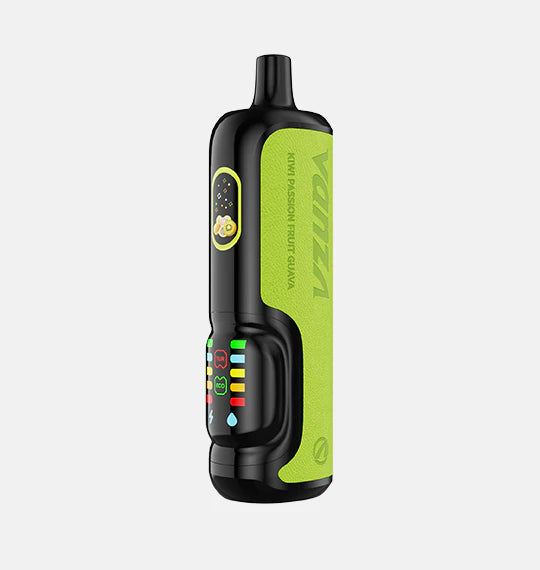
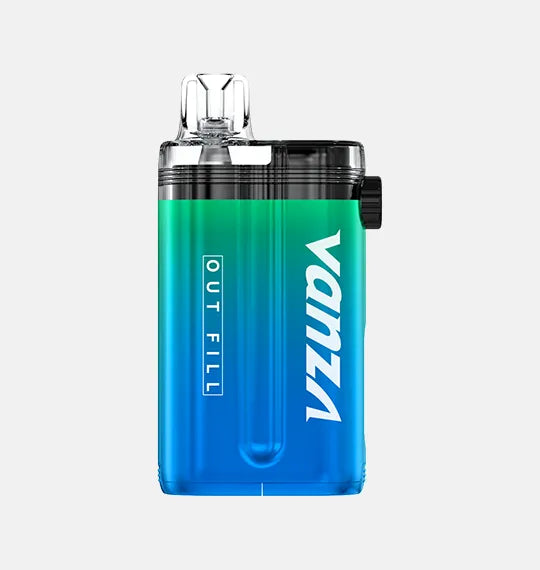
The VANZA CUBIC features design characteristics that align well with current regulatory requirements:
| Feature | CUBIC Specification | Description |
|---|---|---|
| Battery | 900mAh rechargeable | Rechargeable systems signal adult-user orientation |
| Pod capacity | 12ml | Larger capacity reduces youth-appeal perception |
| Control modes | ECO/BOOST dual modes | User-customizable experience; not youth-oriented |
| System type | Refillable pod | Refillable category explicitly preserved under Texas SB 2024 |
| Design | Minimalist aesthetic | Does not prominently feature youth-appealing packaging elements |
The refillable device advantage in 2026's regulatory environment:
State directory laws typically target products requiring authorization—not all products generally. Refillable open-system devices have received more favorable regulatory treatment across multiple jurisdictions. Texas SB 2024 explicitly preserved refillable devices from its country-of-manufacture restrictions. The CUBIC's minimalist design does not prominently feature youth-appealing packaging elements.
For distributors operating across multiple state markets, refillable open-system devices generally offer greater regulatory flexibility compared to flavored disposables with no authorization pathway.

Partner Model: Beyond Products
- Supply chain transparency: Full ingredient documentation, manufacturing records, and facility audit access for regulatory verification
- Market intelligence: Ongoing updates on regulatory developments across federal and state jurisdictions
- Inventory risk management: Guidance on product mix optimization for current regulatory conditions
Six Years of Global Manufacturing & Export Experience
VANZA has been in operation since 2020, building six years of manufacturing and export experience across North America, Europe, and the Middle East. Learn more about VANZA's background. This experience translates into the following capabilities:
- Products designed with regulatory awareness from conception—not retrofitted for compliance
- Documentation systems supporting disclosure requirements for major international markets and international standards
- Supply chain structures supporting regulatory audit and full traceability requirements
- Long-term partnerships with compliance-focused distributors

FAQ: US Vape Regulations for Wholesale Distributors
1. What is PMTA and why does it matter for vape wholesalers?
PMTA (Premarket Tobacco Product Application) is FDA's mandatory authorization process for all vaping products sold in the US. Since September 9, 2020, products without PMTA authorization are technically illegal to sell—regardless of state laws or commercial arrangements. For wholesalers, sourcing non-authorized products creates multiple risks: inventory seizure, supply chain disruption, potential civil liability, and damage to business relationships with retailers who bear downstream compliance responsibility. Only products with FDA Marketing Orders (MGO) are legally marketable without ongoing enforcement risk. The enforcement reality in 2026 means distributors must verify authorization status before procurement, not assume filing status provides protection.
2. Which vape products are currently FDA-authorized?
FDA has authorized a limited number of products through the PMTA process: primarily tobacco-flavored closed-system products from major tobacco company manufacturers including Vuse, NJOY, Logic, and Blu. In May 2026, FDA made history by authorizing the first flavored products—Glas menthol and fruit-flavored pods that utilize Bluetooth age verification technology embedded in the device. Critically, no flavored disposable vapes have received FDA authorization, making this product category the highest-priority enforcement target. For wholesale distributors, the practical implication is clear: authorized products represent a small fraction of available inventory, and sourcing beyond authorized products carries enforcement risk.
3. What did FDA's May 2026 enforcement guidance change?
FDA's May 2026 guidance shifted enforcement priorities without legalizing any unauthorized products. Products with accepted-and-filed PMTAs submitted November 4, 2021, or later receive lower enforcement priority—their products face reduced (not eliminated) seizure risk. Products with youth-appealing features or no PMTA filing whatsoever receive highest priority and remain primary seizure targets. This distinction matters for inventory strategy: "filed" is better than "not filed," but neither constitutes authorization. The guidance also signals that technology-enabled age verification (as demonstrated by Glas's Bluetooth system) may influence future authorization decisions for flavored products.
4. Are refillable pod systems exempt from US vape regulations?
No product category is fully exempt from US vape regulations. However, refillable open-system devices receive more favorable regulatory treatment across multiple jurisdictions. Texas SB 2024 explicitly preserves refillable devices from its country-of-manufacture restrictions. State directory laws typically create authorization requirements for specific products rather than categorically banning product types—their impact on refillable devices is less direct than on disposables lacking FDA authorization. Products with youth-appealing features remain enforcement priorities regardless of category. For distributors, refillable pod systems from documented manufacturers may offer broader market access than flavored disposables, but compliance obligations remain substantial.
5. What is the PACT Act and how does it affect vape shipping?
The PACT Act (as amended) restricts vaping product shipping through multiple mechanisms. USPS has banned vape shipments entirely since March 27, 2021. Major carriers FedEx and UPS have also restricted vape shipping, leaving distributors dependent on specialized logistics providers. Beyond carrier restrictions, distributors must register with ATF and all relevant state tax administrators before shipping, implement dual age verification at purchase and delivery, submit monthly shipping reports to each state of operation, and limit shipments to 10 pounds maximum. Non-compliance with any PACT Act requirement can result in shipment seizure, penalties, and potential license revocation.
6. Which US states have banned flavored vapes?
Seven states have enacted statewide flavor bans, with California and Massachusetts notably including menthol in their bans. Beyond statewide bans, over 420 local jurisdictions have passed additional restrictions—creating micro-patchwork within states that requires jurisdiction-by-jurisdiction compliance verification. Ten states have implemented PMTA-based directory laws that functionally achieve similar market impacts (removing flavored products from legal commerce) without explicitly banning flavors. The regulatory landscape varies significantly by state and even by municipality, making multi-state distributors' compliance burden substantial. Texas SB 2024 represents a different approach—targeting country of manufacture rather than flavor profile—while explicitly preserving refillable devices.
7. What happens if non-compliant vape products are seized at US ports?
FDA and CBP operate joint import enforcement at ports of entry. Seizure follows established legal procedure: CBP identification and detention, Notice of Seizure issued to importer of record, a 30-day response window for contesting or abandonment, potential default judgment if no response, and destruction with costs assessed against the importer. Import Alerts can flag entire product categories or manufacturers for automatic detention—every subsequent shipment faces detention without individualized review. "I didn't know" or "I was told the products were compliant" are not recognized legal defenses. The importer of record bears full responsibility for shipment compliance.
Conclusion: Your Compliance Action Plan for 2026
The US vape regulatory landscape in 2026 demands proactive compliance strategy, not reactive crisis management. The enforcement mechanisms described in this guide—seizure at ports, Import Alert detention, state license revocation, and inventory destruction—are not hypothetical threats. They are operational realities that have eliminated distributors who failed to prioritize compliance.
Immediate Actions for Wholesale Distributors
-
Audit your product portfolio against the FDA Marketing Order database immediately. Products lacking authorization represent existential inventory risk.
-
Verify manufacturer registration status with FDA. Unregistered manufacturing facilities are priority enforcement targets.
-
Map inventory against state directory laws in your operating territories. Products removed from state directories create stranded inventory with no domestic market.
-
Assess packaging compliance for youth-appealing features. Products with cartoon characters, toy-like designs, or youth-oriented imagery face automatic elevated enforcement priority regardless of other factors.
-
Stress-test your logistics against PACT Act requirements. Carrier relationships, registration status, age verification systems, and reporting infrastructure must all be verified.
Strategic Positioning for 2026 and Beyond
The regulatory environment increasingly favors compliance-intelligent supply chains. Refillable pod systems with documented manufacturing credentials and regulatory-compliant design face lower enforcement risk than flavored disposables with no authorization pathway. Partners who invest in compliance infrastructure now will have structural advantages as enforcement intensifies.
The China export policy changes in April 2026 add another dimension: manufacturing consolidation among licensed facilities, changing cost structures, and increased importance of supplier credentials. Distributors should reassess supply chain strategies with these macro-level changes in mind.
Ready to discuss compliant product sourcing for the US market?
📧 business@vanzatech.com
6 Years of Experience | 1,500+ Team Members
For product specifications, manufacturing credentials, or supply chain partnership inquiries, contact VANZA's wholesale partnership team. We leverage our manufacturing-side compliance foundation and global operational experience to support distributors navigating regulatory environments worldwide.


Share this article